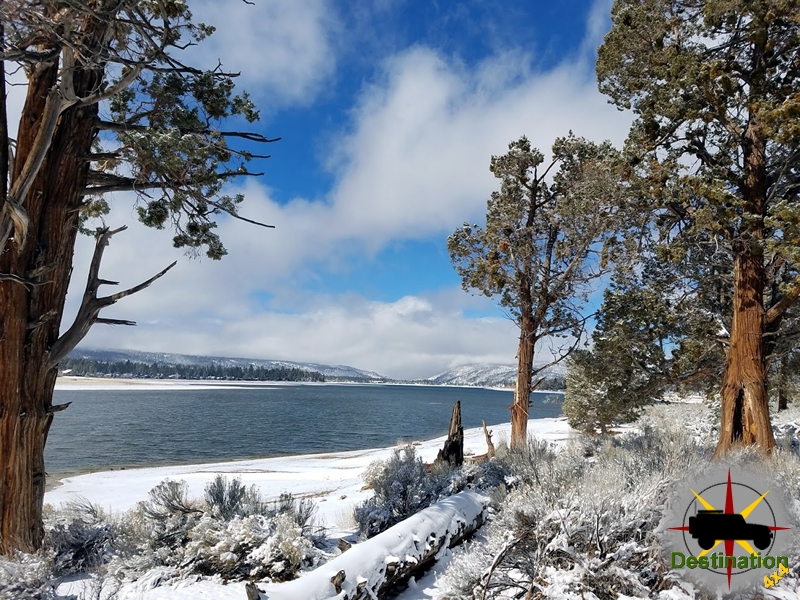
Big Bear, CA
I quiet mountain community full of back country adventure.
The Journey is the destination
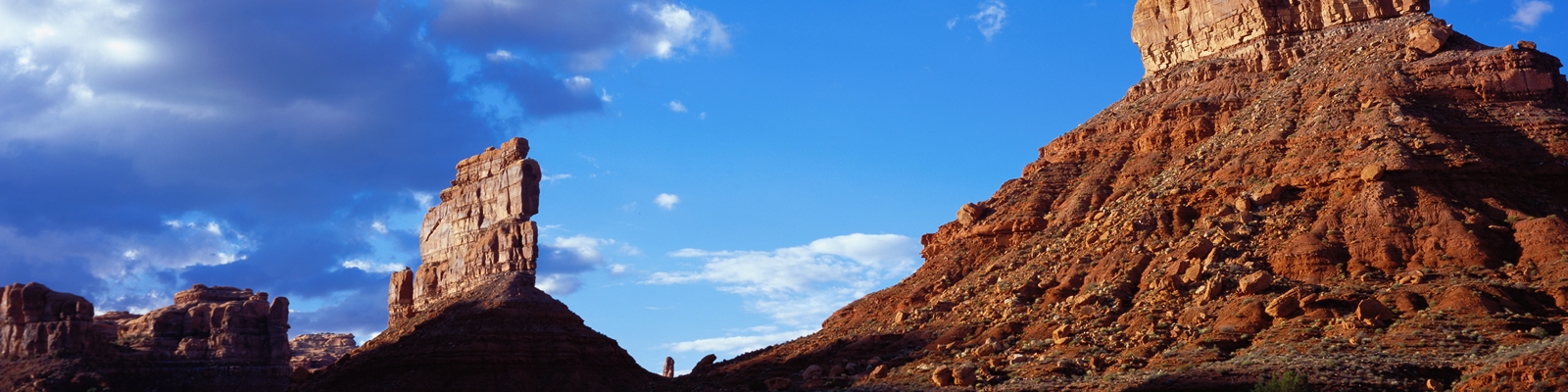
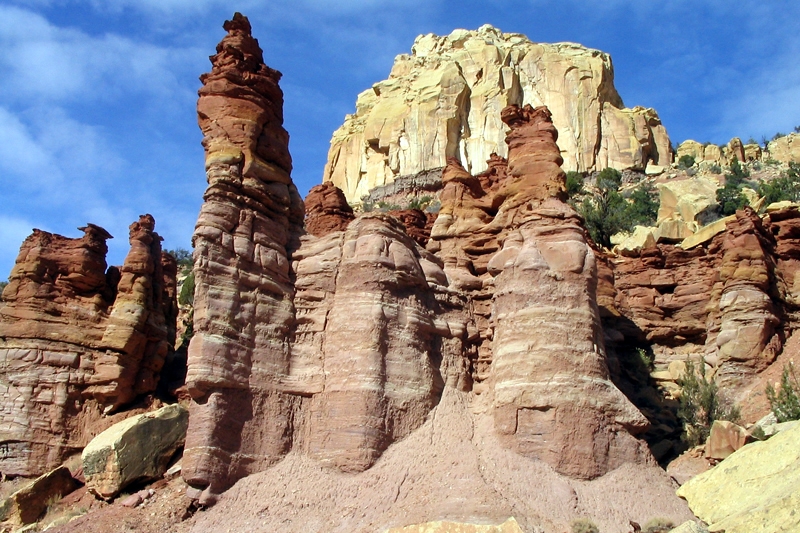
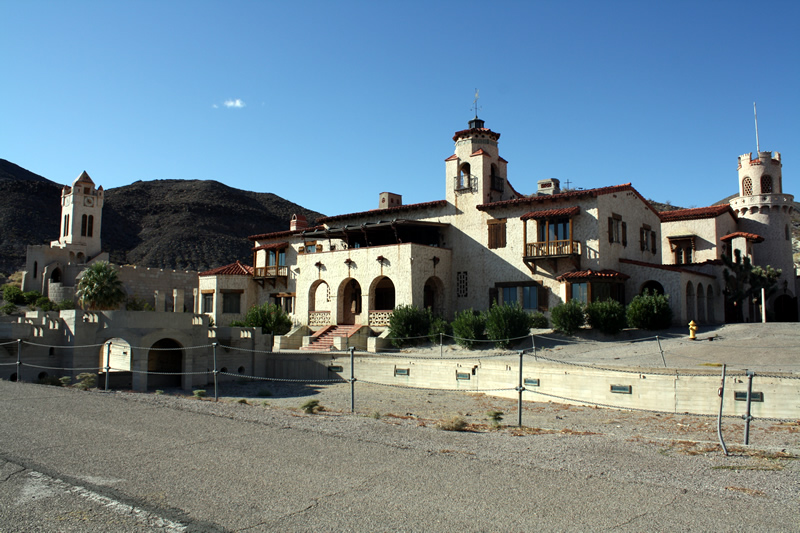
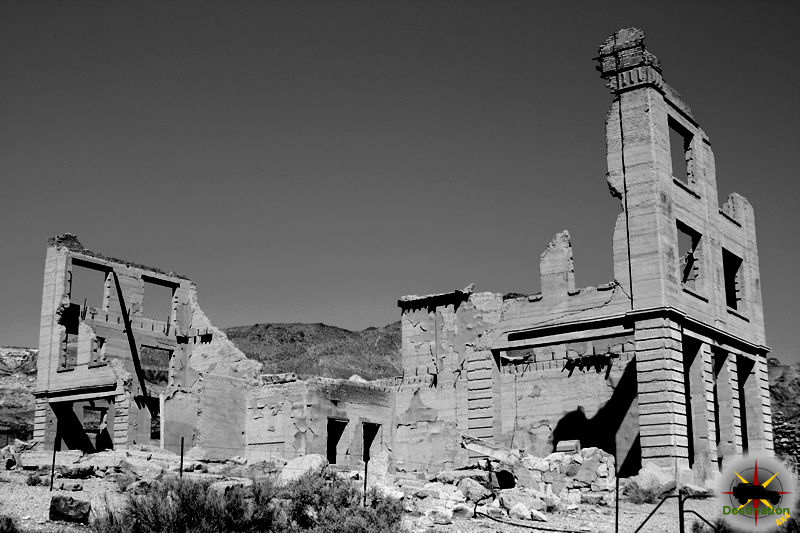
Wildrose Station in Death Valley National Park (California) is a historic site in Wildrose Canyon on the western side of the park, in the Panamint Mountains. It sits near the junction of Emigrant Canyon Road and the Trona-Wildrose Road, roughly a mile below Wildrose Spring. Long valued for its reliable water and relatively mild higher-elevation climate, the site evolved from an Indigenous and early traveler oasis into a stage station, tourist stop, and CCC-era facility.

Wildrose Spring and the surrounding canyon have long been important. The Timbisha Shoshone used the area seasonally, traveling from the floor of Death Valley into the higher Panamints for pinyon pine nuts and other resources. Prospectors, freighters, and travelers camped at the spring from the earliest mineral explorations in the region. By the late 1870s, during charcoal production for nearby mining, it served as a natural rest stop for pack trains and workers.
In 1877 the Modock Consolidated Mining Company (associated with George Hearst) completed ten beehive-shaped stone charcoal kilns higher up Wildrose Canyon. These produced charcoal from local pinyon pine for silver-lead smelters about 25 miles west in the Argus Range (Lookout/Modoc area). Roughly 40–50 workers (woodcutters, burners, packers, and support staff) operated the kilns; a temporary camp known as Wildrose housed around 100 people at peak. Charcoal was hauled by mule and wagon. Operations lasted only until about 1878–1879 when the mines declined, helping preserve the kilns, which remain among the best-surviving examples in the West.
Wildrose Station itself developed as a service point. It may have functioned as a water and resting spot for prospectors and mule teams as early as the late 1870s. From about 1908 to 1917 it operated as a stage station on the Ballarat–Skidoo route during the Skidoo gold boom. Facilities then included a wooden station building, corral, and blacksmith shop. Stage drivers changed horses there. Freight wagons from the Johannesburg railroad terminal (roughly 95 miles away via Ballarat) also used the route.
After World War I the site saw intermittent use. By the early 1930s it had been rebuilt or expanded with structures reportedly moved from abandoned mining camps. It offered cabins, a small store/curio shop, eating facilities, and gasoline for tourists seeking a quieter alternative to Furnace Creek or Stovepipe Wells. Popularity grew through the late 1940s and 1950s.
In 1971 the National Park Service determined the structures unsafe and unsuitable for habitation. The commercial resort closed, and buildings were removed to restore a more natural or historic appearance. Foundations, retaining walls, and rock work remain visible; a picnic area continues at or near the site. Recent flooding (including from Hurricane Hilary remnants in 2023) damaged stairs and other features at the Wildrose Station picnic area.
The nearby Wildrose Campground (elevation about 4,100 feet) occupies part of the broader historic area and provides a cooler base for visiting the charcoal kilns, Wildrose Peak, and higher Panamint trails. Access involves vehicle length restrictions (typically under 25 feet) on the narrow, winding roads.
Death Valley National Monument was established in February 1933. The CCC, created that year under President Franklin D. Roosevelt’s New Deal to employ young unemployed men on conservation and public-works projects, arrived quickly. By October 1933 two companies (about 400 men) were in the monument. Over the next nine years, twelve companies worked there. Enrollees received $25 per month ($20 sent home to families, $5 kept by the men). They lived under quasi-military discipline directed by Army Reserve officers and performed work supervised by the National Park Service and other agencies.
Major CCC accomplishments in Death Valley included:
The CCC made the new monument usable for visitors in its early years. Work ended by May 1942 as enrollees were drawn into World War II military service.
Three permanent (or main seasonal) camps and several spike (temporary/side) camps housed the crews:


Wildrose Station illustrates successive layers of human use—Indigenous seasonal travel, mining support and stage service, early tourism, and New Deal-era development—in a high-canyon oasis. The CCC’s work at Wildrose and across Death Valley transformed a remote, nearly roadless monument into a place accessible to the public, leaving roads, trails, buildings, and campgrounds that remain foundational to the park today. Visitors can still experience the cooler elevation, view the charcoal kilns, hike Wildrose Peak, and see subtle traces of the station and CCC camp amid the pinyon-juniper landscape.
The Wildrose Charcoal Kilns stand in Wildrose Canyon in the Panamint Mountains of Death Valley National Park, California, at an elevation of roughly 6,800–6,900 feet. These ten nearly identical beehive-shaped masonry structures are widely regarded as the best-preserved examples of 19th-century charcoal kilns in the western United States. Built in 1877, they operated for only a short time (primarily 1877–1879) to supply fuel for silver-lead smelters, then were abandoned. Their brief use, remote location, and solid construction have left them remarkably intact more than 145 years later.

In April–May 1875, prospectors including B.E. Ball, J.E. Boardman, E.W. Burke, and J.S. Childs discovered rich silver-lead deposits while searching for the legendary “Lost Gunsight” lode on the east slope of the Argus Range (west of Panamint Valley). The principal claim became known as the Modoc (or Modock) Mine. Ore averaged 100–300 ounces of silver per ton, along with lead and other metals.
By August 1875 the claims had been acquired by San Francisco investors who formed the Modock Consolidated Mining Company. One of the directors was George Hearst, a prominent mining expert and father of newspaper publisher William Randolph Hearst. Although Hearst’s other ventures (including later interests that contributed to great wealth) were highly successful, the Modock group was only moderately productive—reportedly grossing around $3 million over roughly three decades of intermittent work.
Initially, ore was shipped to the Surprise Valley mill at Panamint City. In late 1876 the company built two 30-ton (or 60-ton capacity in some accounts) furnaces at the mine site near Lookout (also called Modock), a rough camp that grew to include stores, saloons, a post office, and other buildings. Lookout peaked around 1877. Nearby mines such as the Minietta also contributed ore. Smelting required intense, sustained heat that ordinary wood could not efficiently provide in the sparse desert environment. Local timber near the Argus Range was quickly depleted, forcing the company to look farther afield for fuel.
In spring 1877 the company constructed ten large stone kilns in upper Wildrose Canyon, about 25 miles east of the smelters, where single-leaf pinyon pine (Pinus monophylla) and Utah juniper were relatively abundant. A company man named Morris (or under the direction of S.B. Morrison in some accounts) oversaw construction using local stone mortared with a mix of lime, sand, and gravel. Each kiln stands about 25 feet high with a base circumference of roughly 30 feet (or diameter near 25–30 feet depending on measurement). They are arranged in a neat line up the canyon.
A temporary workers’ camp known as Wildrose housed roughly 40–100 people at peak, including woodcutters, charcoal burners (colliers), packers, cooks, and support staff. Labor details are sparse; some accounts suggest possible involvement of Chinese or Indigenous workers, though confirmation is limited. Early charcoal production in the area may have begun in temporary earth pits before the permanent kilns were finished. A trail or road was established between Lookout and Wildrose Canyon. Freighting was handled initially by Remi Nadeau’s Cerro Gordo Freighting Company and later by the Lookout Coal and Transportation Company, using mule pack trains and wagons.
Charcoal is produced by the controlled, incomplete combustion (carbonization) of wood in a low-oxygen environment. This drives off moisture, volatile gases, and other compounds, leaving a lightweight, nearly pure carbon residue that burns hotter and more steadily than raw wood.
For the Wildrose kilns the typical procedure was:
Yield figures commonly cited for these kilns indicate that a full charge could produce around 2,000 bushels of charcoal. Charcoal was lighter and more compact than wood, making it far more practical to transport over long, rugged distances.
In 19th-century western mining, especially for silver-lead ores, smelting furnaces required temperatures high enough to melt and separate metals from rock and impurities. Ordinary wood burns relatively quickly with a cooler flame and produces more smoke and ash. Charcoal burns hotter (roughly twice the heat of wood in practical furnace use), more slowly and evenly, and with less waste. It was the preferred fuel for many desert and mountain smelters before coal or coke became widely available and economical to transport.
A typical smelter might consume dozens of bushels of charcoal per ton of ore. Charcoal often represented one of the largest operating costs. In timber-scarce regions like the Argus and Panamint ranges, producing it near a reliable wood supply and hauling the denser product was more efficient than hauling bulky cordwood all the way to the furnaces. Without a steady charcoal supply, the Lookout/Modoc smelters could not operate at scale.
The kilns operated actively mainly in 1877–1878 (some sources extend possible use into 1879). By then the available high-grade ore had declined, local pinyon forests near the kilns were heavily cut, and the economics of hauling charcoal 25 miles over difficult terrain became less viable. The furnaces shut down; the mines continued intermittent work under leases into the early 20th century but never regained their 1870s peak. Total production from the Modoc and related properties was modest compared with major silver districts.
Because the kilns saw only brief, intensive use, they escaped the prolonged wear, modification, or scavenging that destroyed many similar structures elsewhere. In 1971 a Navajo stonemason crew from Arizona performed restoration work. More recent preservation efforts (including partnerships involving specialized masonry training) continue to stabilize mortar and replace missing stones using compatible materials. The kilns remain a major historic attraction, accessible by road (with vehicle-length restrictions and seasonal conditions to consider). Visitors often note that the interiors can still carry a faint creosote or charcoal scent.
The Wildrose Charcoal Kilns thus encapsulate a brief but intensive chapter of desert mining: the rapid exploitation of a silver-lead deposit, the logistical challenge of fueling remote smelters, the specialized craft of charcoal production, and the environmental impact on pinyon woodlands that were also important to the Timbisha Shoshone for pine nuts. Their survival offers one of the clearest remaining windows into that industrial process in the American West.
The National Park Service (NPS) is carrying out a multi-year preservation and stabilization project on the Wildrose Charcoal Kilns in Death Valley National Park to protect one of the park’s most iconic historic structures.

The ten beehive-shaped stone kilns, completed in 1877 by the Modock Consolidated Mining Company (with involvement of George Hearst), stand about 25 feet high in Wildrose Canyon in the Panamint Mountains. They produced charcoal from local pinyon pine and juniper for lead-silver smelters roughly 25 miles west in the Argus Range and operated only until about 1879. Their brief use and remote location have left them among the best-preserved examples of such industrial structures in the western United States.
Over time, mortar erosion and material loss have made the kilns vulnerable to weather and moisture. In 2024 the NPS entered a cooperative agreement with Cornerstones Community Partnerships. Master stone mason Alan Ash leads workshops that remove incompatible Portland cement mortars, repoint joints with a compatible traditional hot lime (NHL) mortar matching the original lime-sand-gravel mix, and replace missing stones with carefully matched local materials. Limited stone reconstruction and scaffolding of the domed structures are also part of the work. Sessions occur mainly in spring and fall; scaffolding, fencing, and staged materials may be visible, and some areas can be temporarily closed for safety, though visitors can still view the kilns from a short distance.
This long-term effort stabilizes the kilns so they remain safe and standing for future generations while preserving the mining history and craftsmanship they represent. Visitors are asked to respect posted signs and stay outside fenced work zones.
Ophir is a classic central Nevada ghost town in Nye County, located high in Ophir Canyon on the eastern slope of the Toiyabe Range (elevation roughly 8,000+ feet), overlooking the Big Smoky Valley. It is sometimes called Toiyabe City or Twin River (after its post office). Access today requires a rough high-clearance or 4WD road off State Route 376 near Carvers/Millett. Nevada State Historical Marker No. 64 stands near the turnoff.

Silver ore was discovered in early 1863 by a French prospector named S. Boulerond (sometimes spelled Boulrand), who reportedly kept the find secret for about a year. In 1864, further discoveries were made by a party that included John Murphy; the Murphy Mine (also called the Murphy ledge or Twin River Mine) quickly became the district’s leading producer. A mining district was organized, and the Twin River Mining Company developed the property. R. B. Canfield purchased the principal ledge and helped finance operations.
In 1865 a costly wagon road (about $8,000 for 2.5 miles) was built from Big Smoky Valley. The major infrastructure was the Murphy Mill: a 20-stamp mill completed around 1865–1866 at a cost of over $200,000. It featured eight roasting furnaces, amalgamating pans, and the first experimental Stetefeldt furnace ever built. Native granite was used for foundations and a smelter stack. Early production was strong—roughly $750,000 in the first couple of years—but the unusually hard, dense rock made extraction and milling expensive and labor-intensive. By 1869 the original company went bankrupt due to high costs and a shortage of millable ore. The Cambridge Silver Mining Company briefly took over and tried cheaper Chinese labor, but protests forced closure around 1870.
A revival began in the early 1870s after a new ore body was found. The Twin River Mining Company (later Chicago Mining and Reduction Company) restarted the mill, expanded to nearby claims (including Grizzly and Cinnamon), and even moved in the old Prussian Mill from Jefferson. Activity continued into the 1880s with another period of relative prosperity. By the 1890s operations largely ceased; the post office (Twin River) closed in December 1893. Total production from the Murphy vein and surrounding properties is estimated at more than $2–3 million in gold and silver (period dollars). Iron, copper, and arsenic were also present. Over 100 claims were staked in the canyon between 1863 and 1895.
Later intermittent activity included work by the Nevada Ophir Mining Company under Walter Trent starting in 1917 (small stamp mill, then a cyanide mill; operations suspended by the mid-1920s). A further short-lived effort under Trent’s Ophir Canyon Mining Company occurred in the mid-1930s. Mid-20th-century tungsten mining near the canyon mouth lasted into the 1960s until subsidies ended; little remains of those operations.
At its peak the town supported a full suite of frontier amenities: school, church, fraternal lodges, stores, hotels, and several saloons. A post office operated from June 1867 to December 1893. Stage service connected it tri-weekly to Austin.
Today the most impressive survivors are the massive stone foundations and walls of the 20-stamp Murphy Mill—among the better-preserved stone-masoned mill ruins in Nevada—along with the stone walls of what was an elegant office and mansion (or related substantial building). Roofless stone cabins, foundations of other structures (possibly including a store or mercantile of brick and stone), and the open portal of the Murphy Mine remain. Some buildings were later razed by the Forest Service as hazards. A historic cemetery lies near the canyon mouth; known markers include those for Jas. Conlon and John Phillips (d. 1900). The site is remote and atmospheric, with the ruins set against the canyon walls.
Peak population reached about 400 in the mid-to-late 1860s. Key figures associated with the town include:
The community was typical of remote Nevada mining camps: a mix of American, European (including French), and other miners, with the usual mix of skilled workers, laborers, merchants, and service providers. Labor tensions surfaced (notably resistance to Chinese labor in 1870). Life revolved around the hard-rock mines and mill; the dense ore required constant tool-sharpening and high manpower. After the main booms, only caretakers, small-scale operators, and occasional prospectors remained until the site was fully abandoned as a residential place.
Ophir exemplifies the boom-and-bust cycle of Nevada’s silver camps: rapid growth fueled by rich but technically difficult ore, ambitious capital investment in milling technology, short periods of prosperity, and eventual abandonment once costs outstripped returns. The substantial stone ruins that survive today stand as durable testimony to the scale of ambition in this isolated Toiyabe canyon.
Well up into the canyon out yonder, one can still see the massive stone foundations of a costly and splendid stamp mill, as well as the stone walls of an elegant office and mansion. Here was the scene of a once busy place, now a ghost town.
Ore was discovered there in 1865 by S. Boulerond and his compatriots. In 1864, the Murphy mine was discovered and became the leading producer; a mining district was organized. During 1865, a 20-stamp mill was completed costing over $200,000. Connected with it was the first experimental Stetefeldt furnace ever built. When the Murphy mill was built, a town was started and it grew to a population of 400, but work in the mines declined in the 1870’s, and Ophir became almost deserted. In the 1880’s, the mines were reactivated, and Ophir had another period of prosperity. By the 1890’s the town was deserted, but some mining activity at the Murphy mine continued sporadically into the 20th century.
Over $2 million worth of gold and silver were mined from the Murphy vein and from surrounding properties. Iron, copper and arsenic were also found in the area.
Ophir managed to have all the accouterments of a large community–school, church, various lodges and, of course, several saloons.
Nevada Historic Marker

| Name | Ophir Nevada |
| Also Known As | Twin River, Toiyabe City |
| Location | Nye County, Nevada |
| Latitude, Longitude | 38.944444, -117.276667 |
| Elevation | 2,479 meters / 8,134 feet |
| GNIS | 860839 |
| Population | 400 |
| Post Office | June 18, 1867 – December 5, 1893 |
Zabriskie Point is a renowned scenic overlook and erosional landscape in Death Valley National Park, California, part of the Amargosa Range on the eastern side of the valley. It sits roughly 4–5 miles (about 6–8 km) southeast of Furnace Creek along California Highway 190, at coordinates approximately 36°25′12″N 116°48′40″W and an elevation of around 710–713 feet (216–217 m) above sea level.
The site is famous for its dramatic badlands: intricately eroded yellow, gold, brown, and rust-colored hills and ridges with almost no vegetation. The most prominent feature visible from the overlook is Manly Beacon, a high outcrop rising to about 823 feet (251 m), named for William L. Manly (one of the “Forty-niners” who helped guide stranded emigrants out of Death Valley during the 1849–1850 California Gold Rush). Distant views often include the valley’s salt flats and the Panamint Mountains to the west. A short paved walk (about ¼ mile / 400 m) leads from the parking area to the viewpoint; trails such as the Badlands Loop also begin nearby.

The landscape is older than modern Death Valley itself. Millions of years before the current valley formed and Lake Manly existed, a prehistoric lake known as Furnace Creek Lake occupied the area (beginning roughly 9 million years ago). Over several million years, sediments—saline muds, gravels from nearby mountains, and ashfalls from the then-active Black Mountain volcanic field—accumulated on the lake bottom, forming what is now called the Furnace Creek Formation (mudstones, siltstones, and related deposits).
Around 5 million years ago the lake dried up. Later tectonic activity—widening and sinking of Death Valley plus uplift of the Black Mountains—tilted the sediments. Rare but intense rains then carved the soft rocks into the intricate badlands seen today. Darker lava caps from eruptions 3–5 million years ago resist erosion in places and help explain why Manly Beacon stands higher than surrounding ridges. The primary source of borate minerals historically mined in the area is also the Furnace Creek Formation.
The point is named for Christian Brevoort Zabriskie (1864–1936). Born October 16, 1864, at Fort Bridger, Wyoming Territory (where his father was stationed), he worked early as a telegrapher for the Virginia & Truckee Railroad in Carson City, Nevada, and held various jobs in Nevada mining towns (including banking and even a partnership in a mortuary).
In 1885 he was hired by Francis “Borax” Smith to supervise Chinese laborers for the Pacific Coast Borax Company near Candelaria, Nevada. He rose to become vice president and general manager, serving about 36 years until retiring in 1933. Under his tenure the company expanded operations into Death Valley (famous for its 20-mule-team borax transport) and later other sites. The overlook itself was developed by the Pacific Coast Borax Company in the late 1920s as a roadside stop for automobile visitors to view Manly Beacon and the badlands, well before the area became Death Valley National Monument in 1933 (later a national park). Zabriskie died on February 8, 1936.

Zabriskie Point has long attracted artists, filmmakers, and photographers for its otherworldly appearance.
Michelangelo Antonioni’s 1970 film Zabriskie Point takes its title from the location. Key scenes, including a lengthy desert sequence with the protagonists and a surreal, choreographed group of bodies in the dunes (sometimes called the “orgy” scene), were shot there. The film was a commercial and critical failure on release but later gained cult status for its cinematography, countercultural themes, and soundtrack (featuring Pink Floyd and others).

U2’s 1987 album The Joshua Tree is closely linked to the site. In December 1986, photographer Anton Corbijn and the band (along with designer Steve Averill) drove through the California desert seeking images that captured themes of America, the desert, and a sense of displacement. The iconic black-and-white cover photograph of the four band members was taken at Zabriskie Point. The landscape’s stark, cinematic quality suited the album’s widescreen aesthetic; the actual lone Joshua tree that appears in other photos (and inspired the title) was found nearby along Highway 190, not in Joshua Tree National Park (which is more than 200 miles away). Working titles had included “The Two Americas” and “The Desert Songs”; the final name came after Corbijn recounted the Mormon settlers’ association of the tree’s form with the biblical Joshua. The shoot was brief and cold; the band’s serious expressions partly reflected the freezing conditions.
The location continues to draw visitors, photographers, and fans of the album, and it has appeared in other media (including later television productions). Its combination of geological drama, mining-era history, and cultural associations makes it one of Death Valley’s most iconic and photographed viewpoints, especially at sunrise and sunset when the colors of the badlands are most vivid.
George Hearst (September 3, 1820 – February 28, 1891) was an American businessman, mining magnate, rancher, and politician who built one of the great Gilded Age fortunes through shrewd investments in gold, silver, and copper mines across the American West. He was the patriarch of the Hearst family dynasty and the father of newspaper publisher William Randolph Hearst.

Hearst was born near present-day Sullivan in Franklin County, Missouri, to William G. Hearst and Elizabeth Collins, of Scots-Irish ancestry. He grew up on a modest family farm (his father operated several small mortgaged farms and a store) with limited formal schooling. From a young age he showed a strong interest in minerals and mining, reading about the subject and gaining practical experience with local lead deposits that had been worked in the region since the 18th century. Local lore later claimed Native Americans called him “the boy the earth talks to” because of his instinct for locating ore.
When his father died in 1846, leaving substantial debts, the 26-year-old George took responsibility for supporting his mother, sister, and disabled brother. He operated a store, leased lead and copper mines, and within a couple of years paid off the family’s obligations. By 1850, with his brother deceased and the family situation stabilized, he joined the California Gold Rush, traveling west with cousins and a small party.
Hearst’s early California years were difficult. Placer mining near Sutter’s Mill and elsewhere yielded little, and a stint running a general store (with an unsuccessful Sacramento branch) left him short of funds. He shifted to quartz mining in the Nevada County area around Grass Valley and Nevada City. He developed the Merrimac Hill mine (named after a Missouri river) and the Potosi, selling them profitably, and in 1857 located the rich LeCompton (or Lecompton) Mine near Nevada City. These successes, combined with practical improvements in extraction methods drawn from his Missouri lead-mining experience, earned him the nickname “Quartz George” and a solid local reputation.
He continued to prospect, deal in claims, raise livestock, and farm in Nevada County while building capital. California remained a base for him throughout his life; he later acquired extensive ranch lands, including the large Piedras Blancas (or Piedra Blanca) Ranch at San Simeon in 1865 and adjoining properties (Santa Rosa and San Simeon ranches), which served as family retreats.
In the summer of 1859, Hearst learned of promising silver assays of “blue stuff” from the Washoe district in what was then western Utah Territory (soon to become Nevada). He hurried across the Sierra, sold his California interests (including the LeCompton), and bought a one-sixth share in the Ophir Mine near present-day Virginia City for roughly $3,000 (accounts vary slightly on the exact figure and partners). He also acquired interests in other Comstock properties, including the Gould and Curry.
That winter he and partners mined high-grade ore, packed it over the mountains by mule, and had it smelted in San Francisco, realizing a large profit (reported around $91,000 after costs on the first major shipment). The Ophir success helped touch off the Washoe/Comstock rush. Hearst’s ability to judge ore and solve separation problems with gold-silver ore made him a millionaire relatively quickly. He constructed a superintendent’s house in Virginia City and expanded holdings on the Comstock Lode, one of the richest silver strikes in U.S. history.
These Nevada successes formed the foundation of his fortune and his later partnership with James Ben Ali Haggin and Lloyd Tevis. The firm of Hearst, Haggin, Tevis & Co. became one of the largest private mining companies in the United States, with interests spanning multiple states and beyond.
Hearst’s Arizona involvement was smaller in scale than his California, Nevada, Utah, South Dakota, or Montana holdings but still notable. He invested in properties in the Tombstone area (including a deal involving the Morning Star Mine around 1880 that reportedly cost him a substantial sum through sharp dealing by a local promoter) and had interests connected to the Tough Nut Lode outside Tombstone.
He also served as a trustee of the North Peer Gold and Silver Mining Company, organized in the mid-1880s to work claims in the Quijotoa District (Pima County, west of Tucson). That short-lived silver boom (peaking 1883–1885 after discoveries on Quijotoa/Ben Nevis Mountain) saw rapid development of camps and companies, though overall returns for many investors, including those in the Peer/Peerless area, proved limited relative to the capital poured in. Hearst’s Arizona activities reflected his pattern of evaluating and buying into promising western districts even as his major capital was deployed elsewhere.
After the Comstock, Hearst expanded aggressively. Key later successes included the Ontario silver mine in Park City, Utah (backed with Marcus Daly in the early 1870s; it produced millions and helped him weather the Panic of 1873), the Homestake gold mine in Lead, South Dakota (purchased with partners from the Manuel brothers around 1877 for about $70,000 and developed into one of the largest and longest-producing gold mines in U.S. history), and a major interest in the Anaconda copper mine near Butte, Montana (financed with Daly; it became one of the world’s great copper producers). He also held interests in New Mexico (Pacific Mine at Pinos Altos), Mexico, Peru (Cerro de Pasco), and elsewhere.
In 1862, at age 41, he married 19-year-old Phoebe Apperson (against her parents’ initial wishes); they eloped and settled in San Francisco. Their only child, William Randolph Hearst, was born in 1863. Phoebe later became a major philanthropist and managed family interests after George’s death.
Hearst entered politics as a Democrat. He served in the California State Assembly (mid-1860s) and was appointed and then elected U.S. Senator from California, serving from 1887 until his death. He acquired the San Francisco Examiner (reportedly in settlement of a debt) and used it politically; his son later took control and built a vast publishing empire from it.
George Hearst died of stomach cancer in Washington, D.C., on February 28, 1891. Contemporary estimates of his wealth ranged into the hundreds of millions (in period dollars). He left a legacy as one of the most successful practical miners and judges of mining property in the American West, whose instincts and capital helped develop some of the era’s greatest mineral deposits in California, Nevada, Arizona, and far beyond.